Posted 17-06-26
We are a Certified B Corporation™
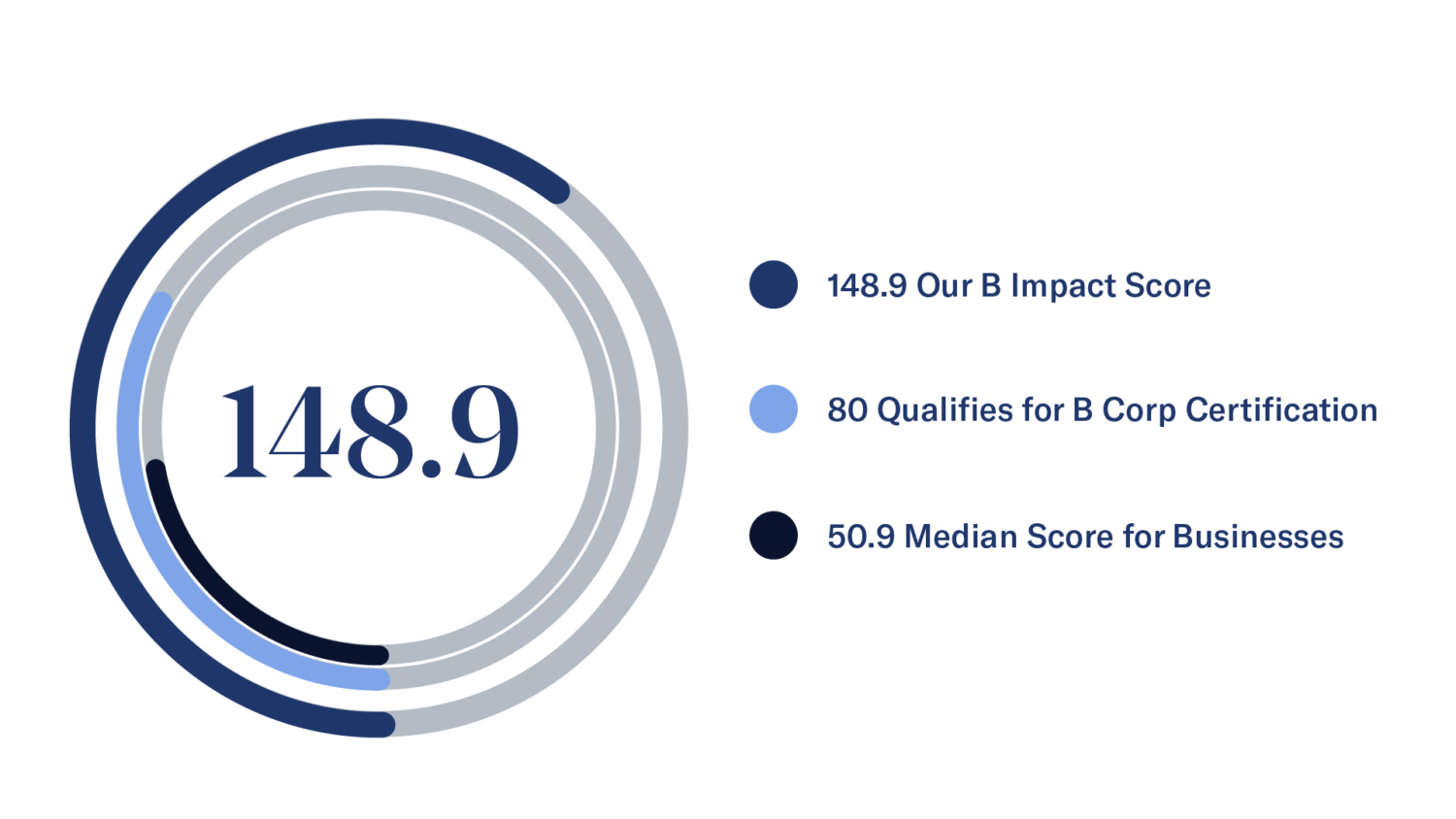
New Zealand has more than 500 Certified B Corps™. Now one of them builds houses. An independent, evidence-based assessment gave us a B Impact™ Score of 148.9, well above the 80-point certification threshold, and told us plainly where we still need to improve.
The insights in this edition come from Josh Milne, Design & Innovation Lead at Home Construction Ltd. Connect with Josh on LinkedIn here.
Why we wanted an independent check
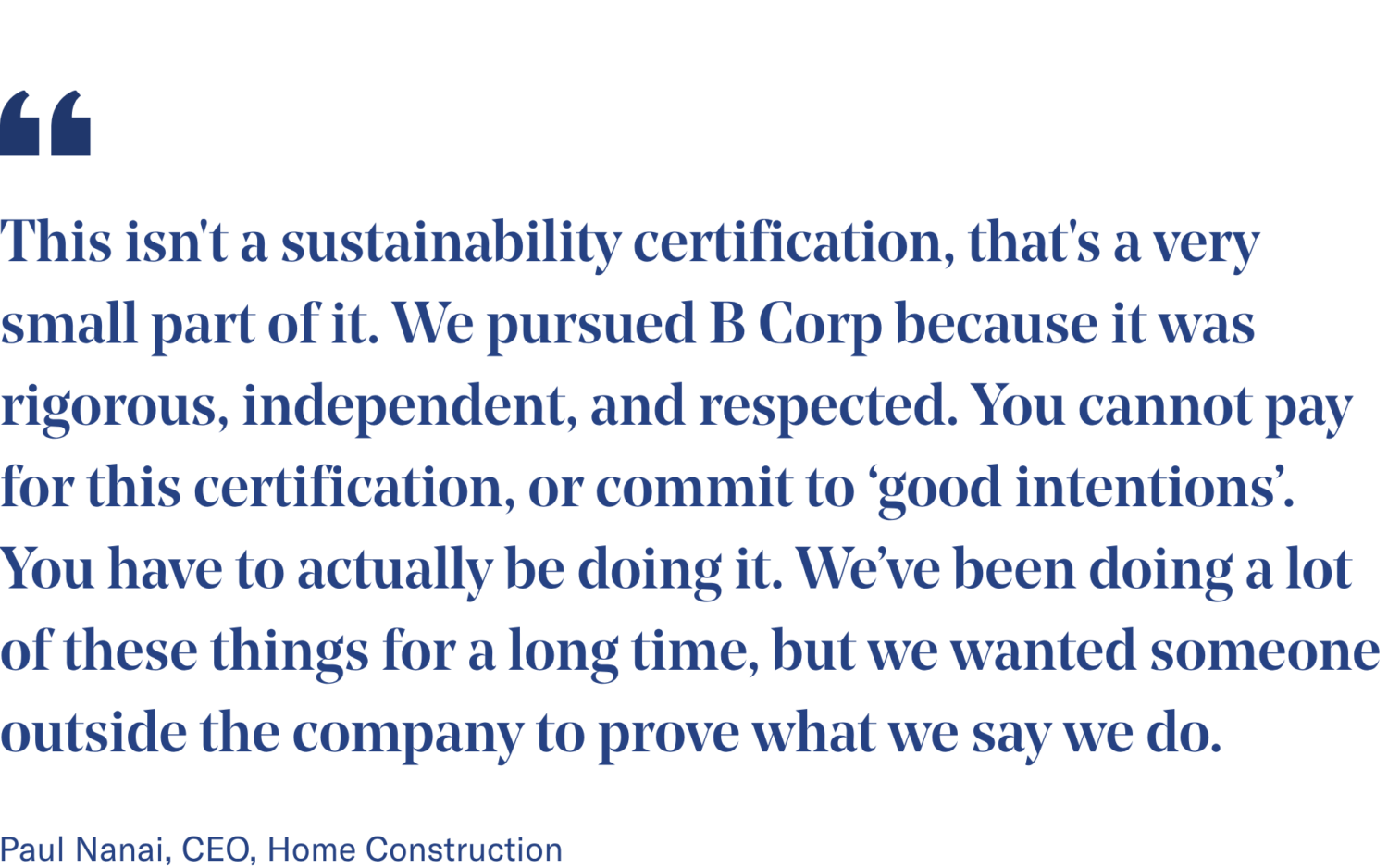
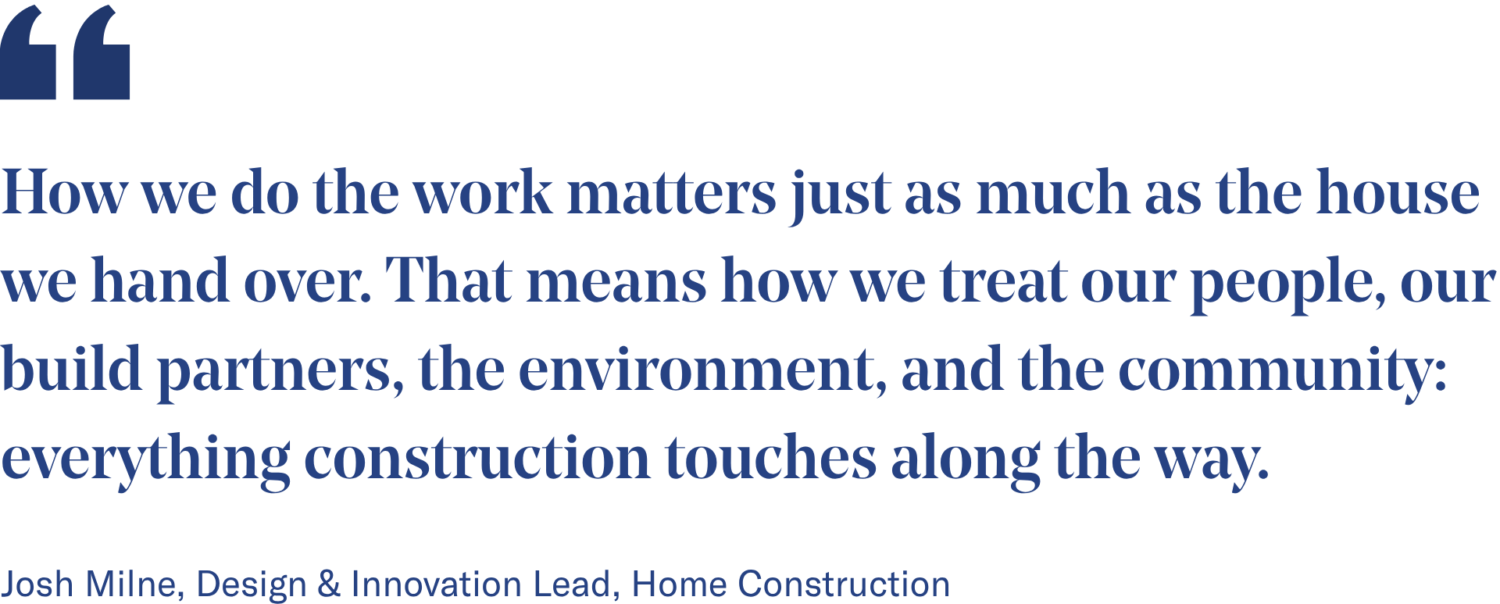
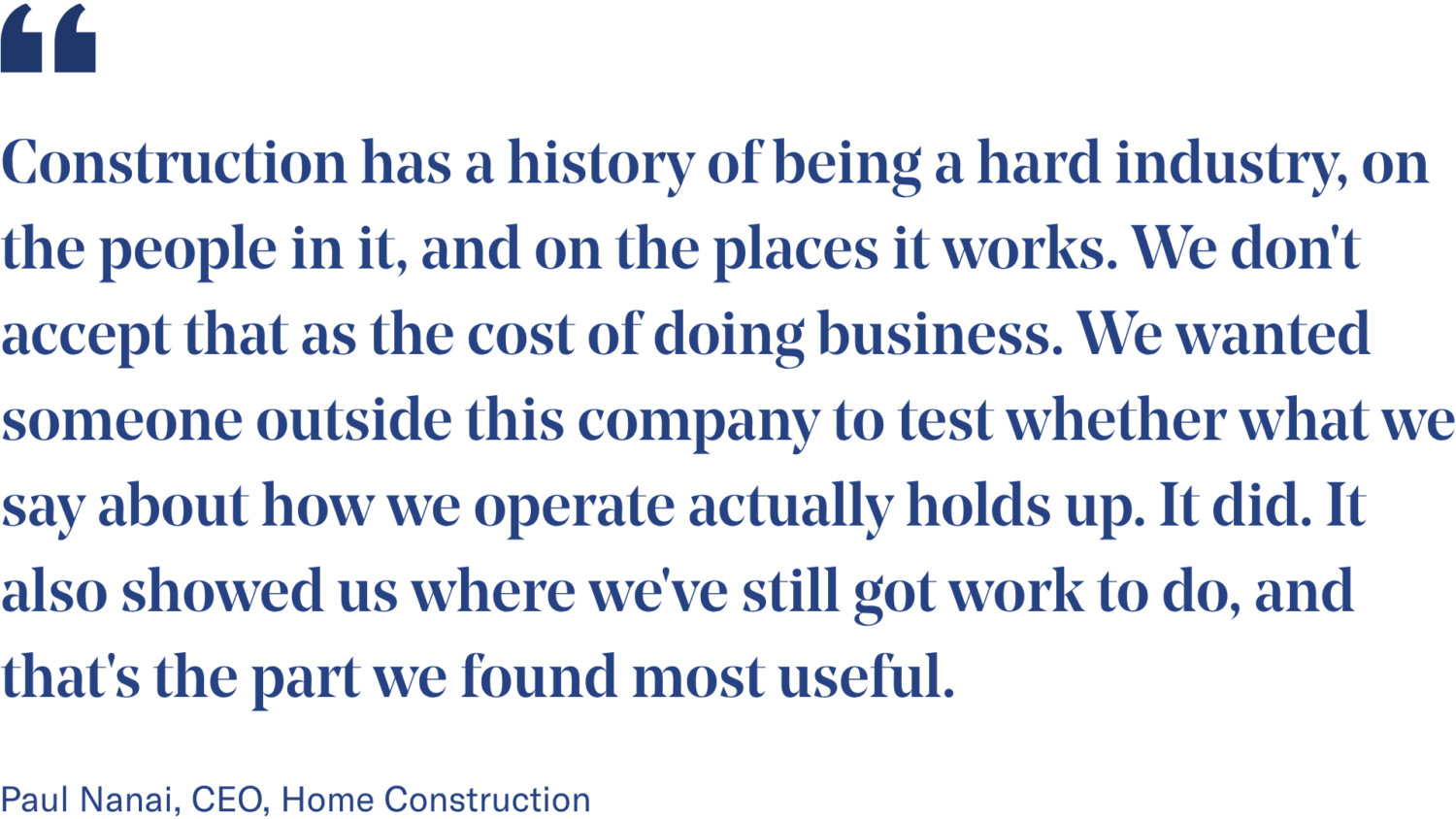
Most of what businesses say about their values is self-reported, including plenty of what we've said about ourselves over the years. We wanted our own claims to hold up against something more than our own word, which is why we started the B Corp process two and a half years ago.
A category the construction industry has been mostly absent from
Joining B Corp means joining a global community of businesses that have agreed to be measured on how they treat people and the planet, not only on profit, one that New Zealand's construction sector has been almost entirely absent from. Based on a search of B Lab™'s public directory, we're confident we're the first full-service construction company in New Zealand to achieve certification. There are more than 500 Certified B Corporations here already, across food, retail, professional services, tourism, and manufacturing. We see joining that group less as a badge and more as evidence, for our own industry in particular, that a construction company can run profitably and still meet that bar.
What is B Corp certification, and what does it measure?
B Corp certification is run by B Lab™, a global non-profit. It assesses an entire company, not a single product or project, across five areas: governance, workers, community, environment, and customers, with the points on offer in each tailored to a company's size, sector, and location. It isn't a sustainability label, and it can't be bought: every answer needs documentary evidence, checked by an assigned assessor. The median score for businesses that complete the assessment is 50.9, against an 80-point minimum needed to certify.
Two and a half years of evidence, not assumptions
Our application ran to roughly 80 pages, and every answer needed proof, not explanation. To evidence a single claim, that more than 90% of our developments are on brownfield sites, we compiled every project address and sourced satellite imagery from before 2022 to show the land had already been built on. That was one answer among hundreds. Our verification call with the assessor, based in India, ran from 8pm to 11:30pm New Zealand time. In a handful of cases we chose to forgo available points where a practice was in place but not documented to the standard required, and those gaps are recorded for recertification rather than papered over.
Our B Impact Score: 148.9
B Lab tailors the points on offer in each impact area to a company's size, sector, and location, so the five areas below aren't directly comparable with each other on raw score alone. B Lab's Australia and Aotearoa New Zealand office publishes typical ranges instead (roughly 10 to 15 for Governance, 40 to 50 for both Workers and Community, 20 to 45 for Environment, and about 5 for Customers), which is the fairer way to read our five scores.
Community, 49.5: Near the top of the typical range, and our largest contributor overall. Designed to Give, worth 26.4 points, reflects that our profits go back into our charitable purpose rather than to shareholders (more below). We also logged 1,260 volunteer hours, a full-marks result, and women make up 38% of our workforce against a 15.8% sector average, the second-lowest of any industry in the country.
Workers, 27.1: Every one of our 65 full-time and 2 part-time staff is paid at least the living wage, with a lowest hourly rate of $26. More than three-quarters of non-executive staff received a bonus last financial year, from a pool equivalent to 5 to 10% of profit. Financial Security was the strongest component, worth 9.3 points.
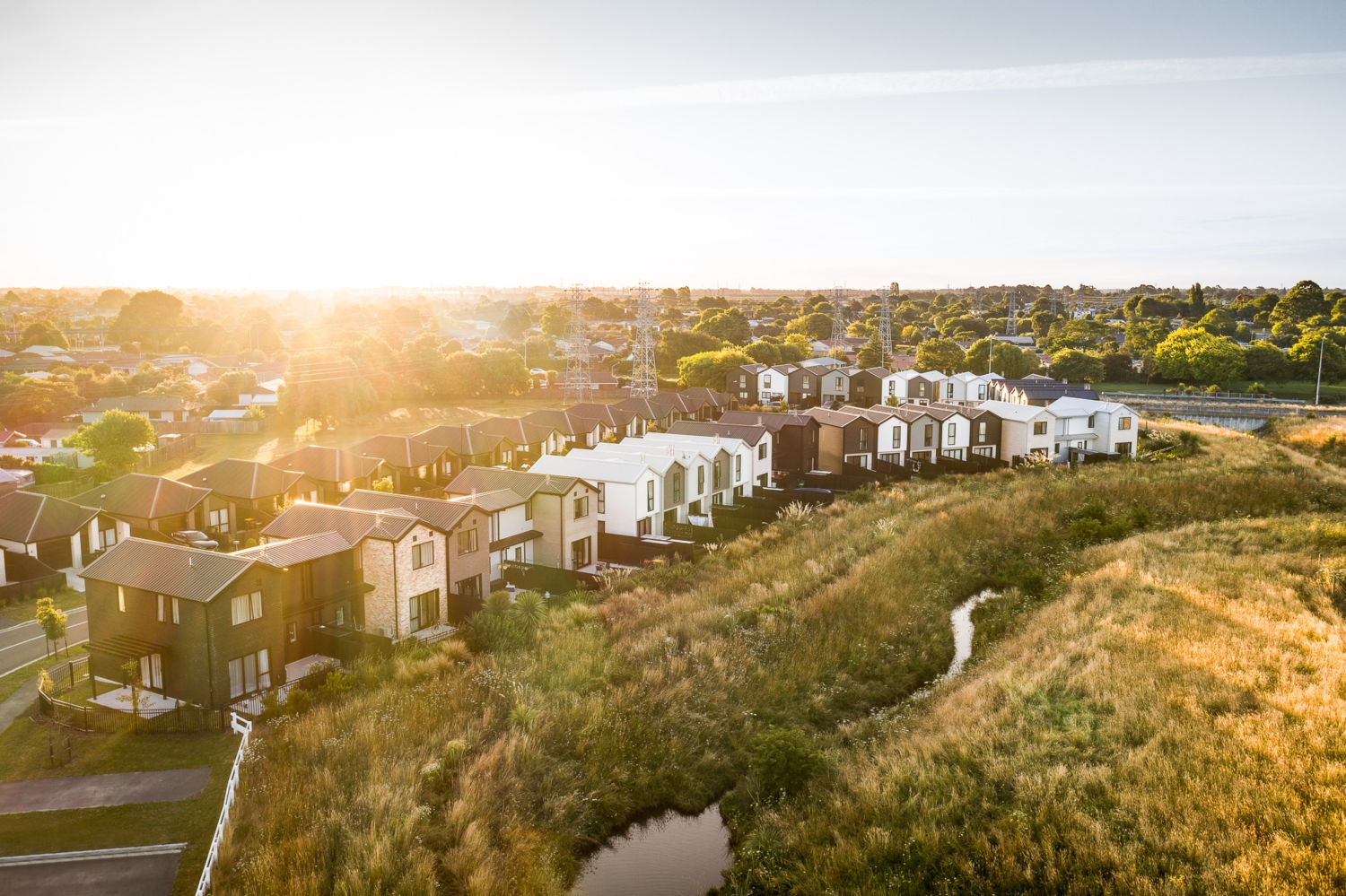
Environment, 53.9: Our highest score in absolute terms, and above the typical range, reflecting that construction is classified as a service with significant environmental footprint. More than 75% of on-site waste was recycled or reused, a full-marks result, and more than 90% of our developments are on brownfield rather than greenfield land. Water was our lowest-scoring component at 0.5, and it's now a specific focus ahead of recertification.
Customers, 3.5: The smallest category in the assessment for any company. We scored full marks on three of the seven questions asked, including supplier quality assurance, where more than 75% of significant suppliers are subject to regular audits. The impact business model that carries points here for some companies wasn't open to us, since it's built for businesses that sell directly to an end customer, and we build predominantly for other organisations.
Governance, 14.7: Near the top of the typical range. We amended our constitution to commit, legally, to weighing all stakeholders rather than shareholder return alone, what B Lab calls a locked mission, worth 7.5 points. We also hold a written code of ethics, a whistleblower policy, and independently reviewed financial statements shared with staff quarterly.
What this process told us to fix
Certification isn't the finish line. Water management and a formal hiring policy are the two things the process surfaced clearly as areas to improve, both now underway ahead of recertification.
Our charitable model and the "designed to give" difference
Home Construction Ltd is wholly owned by Home Foundation, the charitable foundation established in 2020 as the legal owner and kaitiaki of the Home Foundation Group. That ownership determines where our profits go, not how we compete for work; we win our own tenders and receive no special assistance because of our charitable structure. B Lab recognises this as an “impact business model,” and it's the single largest contributor to our Community score at 26.4 points.
Five things worth being able to answer about your own business
Not a checklist anyone is being graded against, just the questions the assessment actually asks, the same ones we had to answer about ourselves; the ones that got us thinking.
Governance: Is your business formally committed, in its governing documents, to weighing more than shareholder return?
Workers: Do all your staff, including trade and site crews, get paid at least a living wage, with real benefits on top?
Community: Who do you actually hire from, and do you run any pathways for people who wouldn't otherwise get a foot in the door?
Environment: Do you track your own emissions and waste, or only talk about a building's performance once it's finished?
Customers: Is there an actual structured way for the people you build for to be heard, or does feedback only happen informally?
Thinking about your next project?
If independent verification of how a construction partner operates matters to your next project, we'd welcome the conversation. Let's discuss your project.